Interview
Yushi Kaisyakuji
Japan
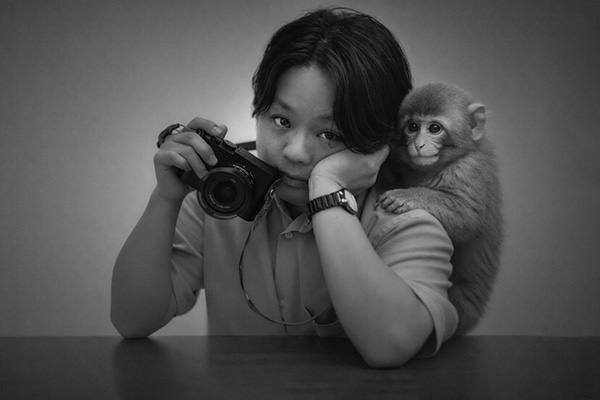
Yushi Kaisyakuji is a photographer based in Oita, Japan, who works in medicine and brings that direct encounter with life into his practice. Drawn to the subtle gestures, tension, and tenderness within living beings, his work centers on what he calls the “breath of life”—quiet, fleeting moments that reveal presence and the invisible connections between all forms of life.
1 Congratulations on winning in the MUSE Photography Awards! Can you share a little about yourself, what inspired you to pursue photography, and how has your journey evolved since your first shot?
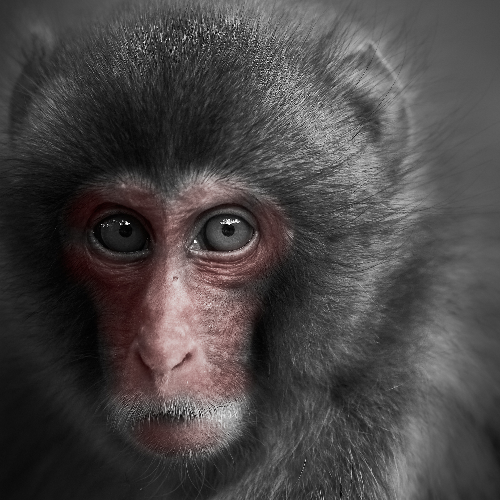
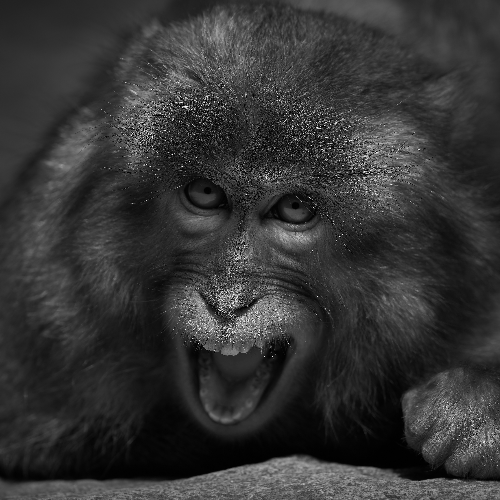
Photography for me began as a way to quietly observe the world. I am based in Oita, Japan, and outside of photography, I work in medicine, where I confront life in a very direct way each day. That experience has naturally shaped the way I perceive living beings. I became interested not only in how animals appear, but in the subtle signs of life within them—the small gestures, the tension, the tenderness. My first photographs were simple attempts to capture animals as they were. Over time, however, my focus shifted from documenting wildlife to exploring something more universal. When I observe animals, especially Japanese macaques, I often feel that their social behavior reflects aspects of human society. Moments of protection, conflict, affection, and hierarchy emerge without any artificial narrative. Today, my work centers on what I call the “breath of life”—those quiet, fleeting moments that reveal presence and connection. Through photography, I hope to create images that allow viewers to pause and feel the invisible relationships that exist between living beings.
2 Can you share the story or inspiration behind your award-winning piece? How does winning this award make you feel about your journey in photography?
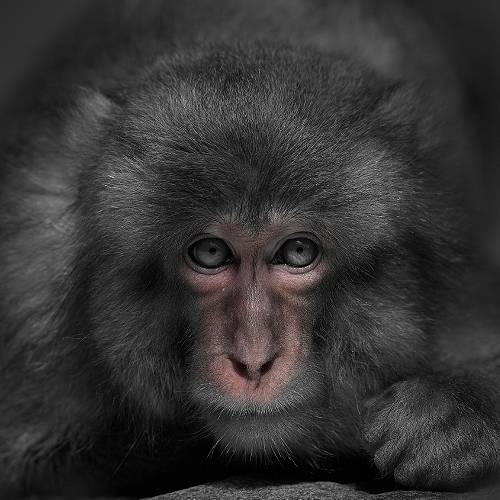
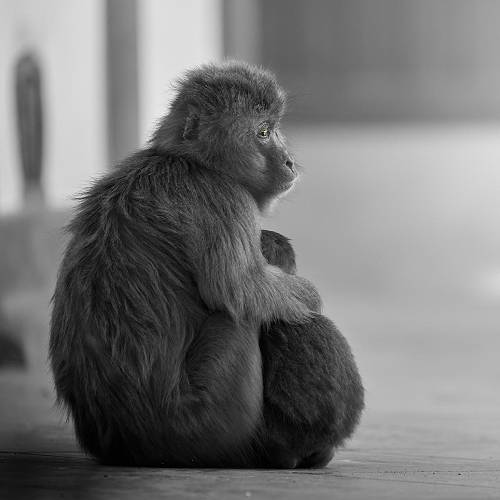
This photograph was taken while observing Japanese macaques in their natural environment. What struck me in that moment was not simply the animals themselves, but the quiet relationship unfolding between them. There was a sense of protection, trust, and calm that felt deeply familiar—almost like a scene from human society. I am often drawn to these subtle interactions. Animals express emotion and social bonds in ways that are incredibly honest and unfiltered. When I photograph them, I am not only documenting wildlife; I am also trying to capture a universal moment of life that transcends species. Receiving this award is both humbling and encouraging. Photography is a long journey of observation and patience, and recognition like this reassures me that the quiet moments I pursue can truly resonate with others.
3 How do you decide which photo to submit for a competition?
When selecting a photograph for a competition, I first consider whether the image carries a clear emotional presence. Technical quality is important, but what matters most is whether the photograph conveys a moment that feels alive. I am often drawn to images that reveal subtle relationships between animals. A gesture of protection, a moment of tension, or a quiet interaction can elevate a simple wildlife photograph into something more universal. In the end, my decision is intuitive. I choose the photograph that lingers in my mind long after I have seen it.
4 What first made you pick up a camera?
Interestingly, the reason I first picked up a camera was quite personal. At the time, there was someone I was very interested in, and photography happened to be her hobby. I thought learning about cameras might give us something to share, so I decided to try it myself. What began as a simple attempt to connect gradually grew into a deep passion. Today, photography has become an important part of my life, and the person who first inspired me to pick up a camera is now my wife.
5 What’s your favorite type of photography, and why do you love it?
My favorite genre is wildlife photography, particularly moments that reveal the social relationships between animals. When observing animals—especially Japanese macaques—I often feel that their society reflects aspects of our own. Gestures of protection, hierarchy, affection, and conflict emerge naturally, without any staged narrative. I am also drawn to black-and-white photography, as it removes distractions and emphasizes presence, gesture, and emotion.
6 What’s your go-to camera setup, and why does it work best for your projects? What’s your favorite feature?
My main camera setup is the Sony α1 II paired with the SEL100–400mm GM lens. This combination allows me to capture decisive moments with exceptional precision and image quality. Despite its powerful capabilities, the system remains surprisingly compact and portable, allowing me to spend long hours quietly observing animals in their natural environment. What I value most is its reliability in capturing fleeting moments with clarity and beauty. And of course—Sony, if you’re ever looking for a photographer to sponsor, I’m always ready.
7 If someone looked at your work, what’s the one thing you’d want them to feel?
If someone looks at my work, the one thing I hope they feel is the quiet presence of life. Through my photographs, I seek to capture fleeting moments where life gently reveals itself. I hope viewers can pause and sense that presence, as if they are standing there—sharing the same space and breath.
8 What was the most challenging part of capturing your winning shot?
The most challenging aspect is patience. Moments like the one in the photograph cannot be planned or directed. To capture a meaningful interaction, I often spend long periods simply observing and waiting. When the moment finally appears, it lasts only a fraction of a second. For me, wildlife photography is a balance between patience and instinct.
9 Is there a specific place or subject that inspires you the most?
One place that inspires me deeply is Takasakiyama in Japan, home to a large population of wild Japanese macaques. Their social behavior—protection, hierarchy, conflict, and tenderness—often mirrors aspects of human society. With every visit, there are always new moments and relationships to discover.
10 Who or what has been your biggest influence in photography?
One photographer who has deeply influenced me is Sebastião Salgado. His work demonstrates how photography can reveal dignity, strength, and humanity through powerful black-and-white imagery. Although I focus on animals rather than human society, I strive to capture moments that express something universal about life.
11 What message would you share to inspire photographers to participate in photography awards, and what advice would you give to help them excel in the competition?
Photography awards are an opportunity to share your vision with a wider audience. My advice is not to chase trends or try to anticipate what judges want to see. The strongest photographs come from a clear and personal vision.
12 What’s one piece of advice for someone just starting in photography?
Learn to observe before you try to capture. Technical skills can always be developed, but the ability to truly see a moment comes from patience and curiosity.
13 What role do editing and post-processing play in your creative workflow?
For me, editing and post-processing are not simply technical corrections. They are a continuation of the creative process—a time when I further shape my thoughts within the image. The moment captured in the field is only the beginning. It is in this stage that a photograph gradually becomes a finished work.
14 How do you see technology, like AI, influencing the future of photography and your own approach?
I see AI as a tool. Like a knife, it can be used in very different ways. A knife can prepare a beautiful meal, or it can cause harm—the same is true for AI. What ultimately matters is the integrity of the person using it.
15 If you could photograph anything or anyone in the world, what would it be?
If I could photograph anything in the world, I would still choose animals living freely in their natural environment. For me, photography is not about seeking extraordinary subjects, but about discovering meaning in the ordinary moments of life.